Ask an Expert with Mike Michalowicz: All the Questions We Didn't Get To
The Profit First questions we couldn’t fit into our session with Mike Michalowicz, answered with his insights and what Fathom can do today.

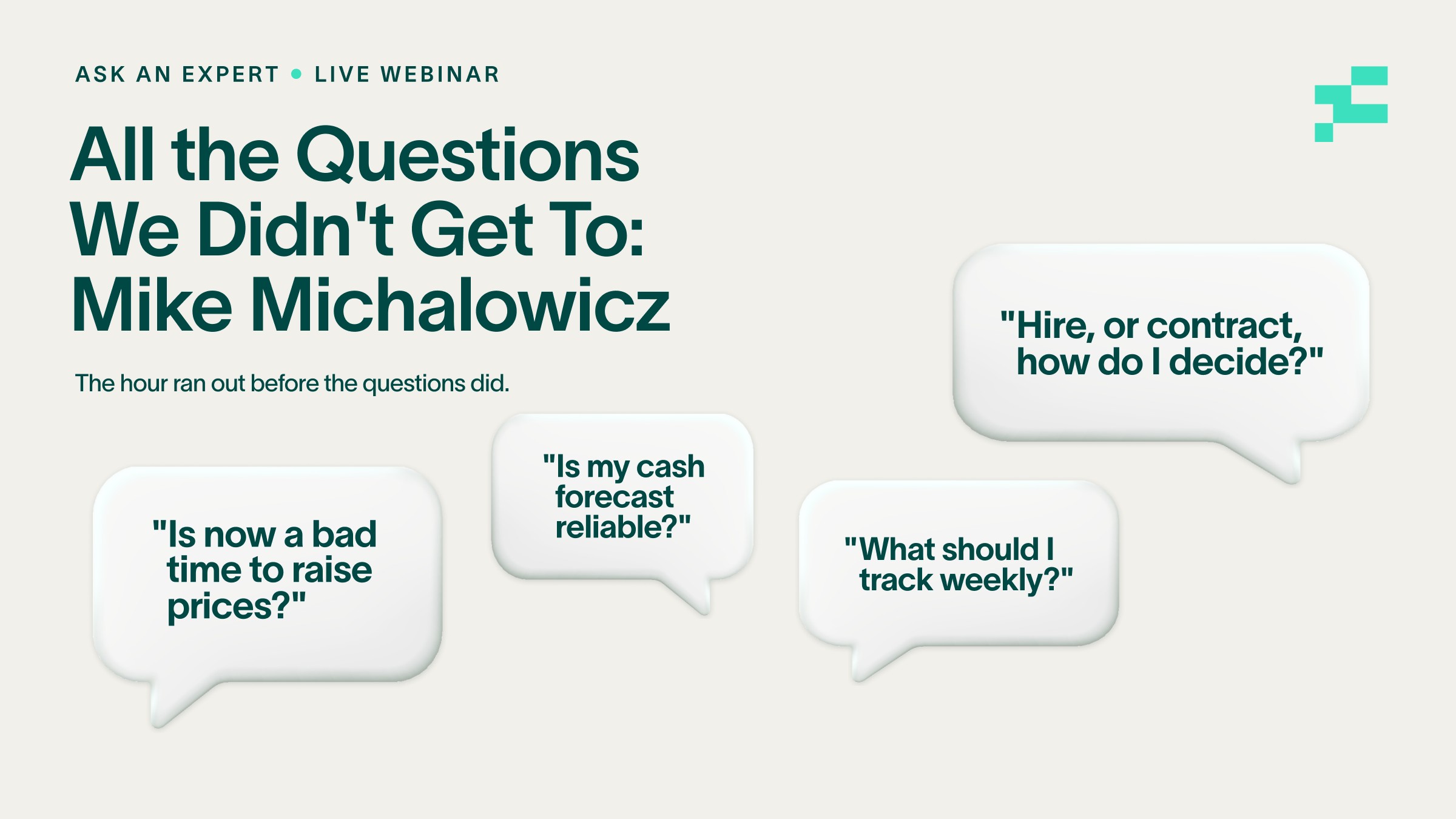
Mike Michalowicz joined us to walk through Profit First, the approach of setting aside profit before expenses at the bank level. You sent in more great questions than we could fit into an hour. Here are the ones we didn't reach on the day, answered with what Fathom can do today and with what Mike shared in the session.
"Where does this number in my forecast come from?"
Fathom lets you trace forecast figures back to their source. For a balance sheet figure, click the number and you'll see every account that affects it, along with the initial movement behind each one. You can also click a cell for an account, open the magnifying glass in the right-hand menu, and see the opening balance, the movements in that period, and the closing balance. Click a movement to see the journal or schedule behind it.
For cash, open the cash flow statement at the top of the forecast grid and select View cash detail to see every movement into and out of your cash accounts.
For P&L figures, click the number and open the value rule to see where it came from. The formula is shown in plain language rather than as Excel formulas.
"How do I track cash runway?"
Fathom start-up guidance shows cash runway as an example of a custom Formula KPI. You build it yourself in the formula builder using the variables from your own accounts. Once it's built, you can add it to your reports.
In forecasting, the Quick Metrics bar also flags periods where cash on hand is forecast to fall below a threshold you set. Meaning you can get a warning before cash turns negative, or long before that if that’s the threshold you choose.
"How is the cash conversion cycle calculated, and why track it for a managed services business?"
Fathom uses the standard formula: Inventory Days, plus Accounts Receivable Days, plus Work in Progress Days, minus Accounts Payable Days. It measures the time between paying out cash and getting it back, so a shorter cycle means less money tied up in your operations.
For service businesses, Fathom suggests tracking WIP days as part of the cycle, since unbilled work ties up cash. Cash conversion cycle is a default KPI for Fathom Pro and Portfolio companies.
"Can I forecast a loan, and what does paying it off early do to cash?"
Yes, for repayments on a set schedule. Fathom can identify loan accounts from their classification in your chart of accounts.
Microforecasts include an Add a loan wizard. Loan repayment schedules can also include a balloon payment for the final residual amount.
"How do I set an opening balance so my cash flow chart loads?"
Cash flow analysis needs an opening balance sheet. If your earliest period shows a "requires an opening balance sheet" message, import balance sheet data for the month before it.
For Xero and QuickBooks companies, you can move the company start date earlier. For MYOB or Excel imports, you may need to delete and re-import the company.
"Does Fathom handle multiple currencies?"
Fathom supports 97 currencies. In a multi-currency consolidated group, it translates each company's results into a presentation currency. You can also replace Fathom's default exchange rates with your own.
"What counts as real revenue when customers pay deposits?"
Mike's answer from the session: when some of the money coming in is really for someone else's costs, set that money aside first, then run the rest through your allocations. He used a builder whose customer payments covered materials and subcontractors. Once those were set aside, the business was working with a much smaller amount of its own revenue.
Mike didn't give margin targets or percentages for deposits, so the right split will depend on your own numbers.
Got a question of your own?