How BPA CPAs Turned Monthly Meetings Into Moments That Actually Move the Needle
May 8, 2026
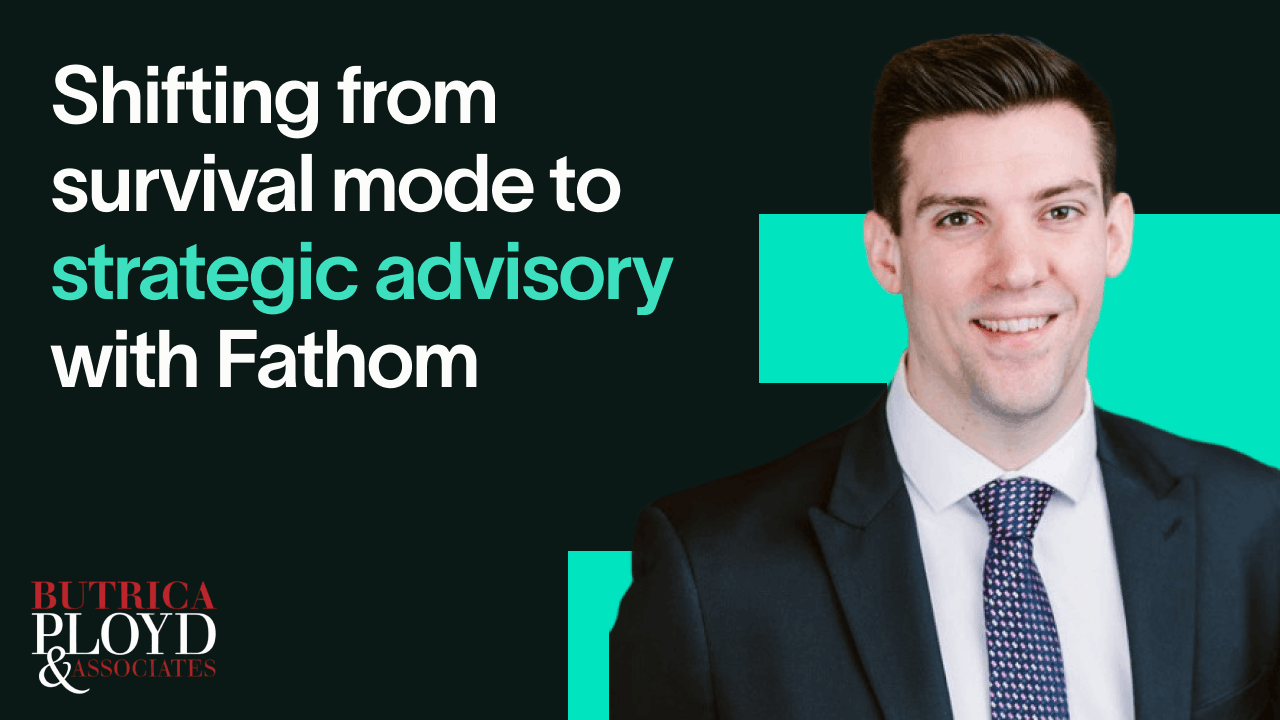
Butrica Ployd and Associates isn't your typical accounting firm. They call themselves an advisory firm first, and they mean it. Based in the US but serving small business clients nationwide (a shift that accelerated during COVID, when everything moved to Teams), BPA's focus is less about getting the tax return done and more about making sure every decision leading up to it is a good one.
Jeremy Slone, BPA's Advisory Manager, sits at the center of that mission. His job is to take the knowledge his team has tax strategy, business planning, financial reporting and translate it into something a business owner can actually use to make better decisions.
"There's no shortage of data. The question is: what actually matters? What moves the needle?"
That question is what led BPA to Fathom.
The problem: too much data, not enough clarity
Before Fathom, BPA's advisory prep looked a lot like it does at most firms. Excel spreadsheets. Manual builds. Hours spent pulling numbers together just to get ready for a single client meeting.
Jeremy had used Syft previously, but found it didn't have everything the team needed. The bigger issue wasn't just the tool, it was the time. For one client still on QuickBooks Desktop, he estimates he'd spend close to two hours on meeting prep without Fathom. And even after all that effort, he'd hit a wall where he had to stop, not because he'd found everything he needed, but because he couldn't justify spending any more time.
That's a painful trade-off for someone whose entire role is about giving clients the best possible advice. You either spend the time and fall behind on everything else, or you cut corners and deliver something less than your best. For a firm that prides itself on being proactive and advisory-led, neither option was good enough.
The solution: reports built for real people
Jeremy wasn't involved in the original decision to bring Fathom into BPA, but once he saw it, he was all in. One of the first things he did was get his Fathom certification, a move that gave him a structured foundation for how to get the most out of the platform. From there, he dove into Ben Cooper's Ready, Set, Go series and immediately started building reports tailored to individual clients.
That word tailored matters. Jeremy doesn't build generic dashboards. He builds reports with a specific person in mind.
"I'm thinking: I'm building this for Chris, because I know Chris doesn't want to look at the financial statements. He wants to look at a graph. He wants to see something where he can immediately spot a trend and know what it means for him."
When a report carries a client's logo, their color scheme, their business name. Those small touches change how a business owner engages with it. It goes from feeling like an accounting deliverable to feeling like something that's genuinely theirs. And from there, the advisory conversation opens up naturally.
Jeremy uses Fathom's reporting as a rearview mirror, what's happened and where trends are heading and the forecast as the windshield, pointing to what's coming and what decisions need to happen now. If something looks off in the report, he dives a layer deeper, brings the context to the client meeting, and works through it together.
He also leans heavily on non-financial KPIs through the Google Sheets integration, connecting operational data to financial outcomes in ways that make the full picture click. And he reuses and adapts report templates across his client base, building once, then tailoring for each business, which compounds the time savings across every engagement.
That QuickBooks Desktop client who used to take two hours of prep? Now it takes about 30 minutes to deliver the same quality of work, often better.
The impact: from breaking even to making real decisions
One client in particular stands out. A franchise business that had been stuck, breaking even for a couple of years, just battling to stay afloat.
After implementing Fathom and setting up monthly reporting, Jeremy and the client were able to spot trends and have conversations that the data alone wouldn't surface. They tightened up inefficient service routes that were bleeding money. They identified where costs were out of line. They figured out when and where to hire.
"It's conversations. This isn't a data point that's in Fathom, but it's what Fathom allowed us to have a conversation about."
The result? The business went from treading water to having its first genuinely profitable year. Jeremy remembers pulling up their Fathom report around September or October and thinking: "Wow, we've really come a long way in a year."
The problems shifted too, in the best way. Instead of asking "how do we survive?", the conversation became about tax efficiency and where to reinvest. A much better set of problems to solve.
What it really comes down to
Jeremy often thinks about a stat he came across: the average person makes roughly 35,000 decisions a day. For a business owner, that number is probably even higher. Only a handful of those decisions truly matter at scale.
What Fathom does, in Jeremy's view, is bring the right information to the surface, so advisors and their clients can focus on the decisions that actually change the trajectory of a business, not just the ones that feel urgent in the moment.
For business owners who aren't numbers people and most aren't, that clarity is everything. They got into business because they're great at what they do. They just need help with the financial side, delivered in a way that actually makes sense to them.
And that's what BPA delivers with Fathom: not just reports, but confidence. The confidence to know what you're looking at, what's important, and what to do next.
"If you're not using it, you're missing out on the best tools in your tool belt to do the best job you can for your client."
Jeremy also gives a nod to Fathom's support team, noting that responses come quickly, even outside US business hours and are consistently helpful. It's one of those details that adds up over the years of using the platform.
Ready to turn your client meetings into something more?
Start your free 14-day Fathom trial and see what better reporting and forecasting can do for your advisory practice.

Mallory is a campaign marketing manager at Fathom, with a background in sales, field marketing, and growth marketing across sectors. She's driven by helping finance teams discover how Fathom can make a real impact on their day-to-day.


Start for free
Finally understand what your numbers are saying
Connects to your favourite accounting tools. No set up fee. No credit card required.
Try free for 14 days →
Trusted by 100,000+ businesses worldwide

Features
Get a clearer picture of your business performance and in-depth analysis of your numbers.
See all features

Integrations
Live data from your favourite accounting tools in Fathom. No exports, no manual uploads, ever.
See all integrations
Start for free
Your data already has the answers. Fathom helps you find them.
Try free for 14 days →Trusted by 100,000+ businesses worldwide
Start for free
Your data already has the answers.
Fathom helps you find them.
Fathom connects your accounting tool automatically and handles the heavy lifting — so you can focus on what the numbers actually mean.
Try free for 14 days →
No setup fee
No credit card

AI Commentary
You may also like