Summary
Think of this as your Swiss Army knife for financial reporting. Kevin Steel built this template to do double duty: wow prospects during discovery calls and then become your go-to monthly board report once they're a client. It shows off three-way forecasting in action, breaks down variances so everyone actuallyunderstands what's happening, and brings together financial and non-financialdata into one beautiful, trust worthy source of truth.
What’s included
Annual Performance & Forecasting:
- Annual forecast vs year-to-date actuals with variance analysis
- YTD forecast vs YTD actual comparison
- Monthly budget variance breakdown
Cash Flow Analysis:
- Cash availability and cash on hand tracking
- Net cash flow calculations (total cash received minus total cash paid)
- Cash flow trends with actual and projected figures
Comparative Analysis:
- Month-over-month comparisons
- Year-on-year P&L and balance sheet (2-3 years historic plus 2-3 years forecast)
Visual Dashboards:
- High-level overview with revenue, GP margin, and operating margin trends
- Revenue vs gross profit vs profit before tax visualization
- Cash flow trend graphs
Detailed Breakdowns:
- Revenue analysis with revenue mix by segment
- Cost of sales breakdown
- Top 10 expenses with expenditure mix
- Net profit before tax tracking
Non-Financial KPIs:
- Department-specific KPIs (Sales, Operations, Customer Service, etc.)
- Custom metrics tailored to each client
Line-by-Line Detail:
- Traditional Excel-style P&L breakdown
- Balance sheet line-by-line
- Cash flow statement detail
Interactive Tools:
- Scenario planning layers (good/medium/bad scenarios)
- Goal Seek functionality for target setting
- Micro-forecasting capabilities
Why it’s effective
As a Sales Tool:
Most business owners in the $1-25 million revenue range have seen their share of spreadsheets with 500 tabs full of disconnected numbers. This report changes that conversation entirely.
When you show three-way forecasting in action (updating the P&L and watching the balance sheet and cash flow automatically adjust), you're showing them a fundamentally better way to run their business. It clicks instantly.
But the real showstopper? Goal Seek. Picture this: you're on a discovery call, and you ask, "What if you wanted to move your profitability from 6.41% to 10%?" Then you show them exactly what needs to happen (increase prices by 1.82% OR cut fixed expenses by 1.4%). Right there, in real time,you've moved from "Here's another accounting tool" to "Here's how we're going to transform your business."
As a Monthly Reporting Tool:
Good reporting doesn't just show you the numbers. It tells you what to do about them. That's why Kevin built in a structured variance analysis that forces you to answer three questions for every significant variance:
1. What happened?
2. Why did it happen?
3. So what? (What's next?)
Instead of just noting a $10,500 revenue miss, you dig in: "One of our major customers was behind on billing. Next step: sales team contacts client to resolve." Now you've got accountability and a clear action item.
Comprehensive Yet Digestible:
The beauty of this report is how it speaks to everyone in the room. Your CEO gets high-level visual dashboards that tell the story at a glance. Your CFO gets line-by-line detail for deep analysis. And by bringing in non-financial KPIs from every department, you make Fathom the single source of truth for the entire organization, not just the finance team.
Designed for:
- Fractional CFOs and advisory accountants who want to wow prospects and deliver ongoing value
- Accounting practices ready to move beyond compliance and become true business advisors
- Finance teams building their monthly board reporting from scratch (or finally fixing what's broken)
- Business owners in the $1-25M revenue range who are tired of spread sheet chaos
- CFOs and finance directors presenting to boards and stakeholders who need clarity, not clutter
- Advisory firms positioning themselves as strategic partners, not just number crunchers
Report Breakdown
Step 1: Set Up Your Three-Way Forecast
Start with the foundation. Build your three-way forecast in Fathom so your P&L, balance sheet, and cash flow all talk to each other. When you change something in one place during a discovery call and everything else updates automatically, that's when jaws drop.
Step 2: Create Your Annual Forecast Comparison
Build your first section with three columns: full year forecast,year-to-date actual, and the gap between them. Stick to the big stuff: Revenue, Cost of Sales, Gross Profit, Operating Expenses, EBITDA, and Net Profit.
Step 3: Build Your YTD Forecast vs Actual Section
Show whether you're ahead or behind the game. Where did you think you'dbe six months in? Where are you actually? The gap tells you if you need tocourse-correct or if you're crushing it.
Step 4: Add Monthly Variance Analysis
Zoom into the current month. Show forecast vs actual for each key lineitem. For each major variance, answer those three questions: What happened?Why? So what?
Step 5: Set Up Cash Flow Tracking
Include current cash on hand, last month's cash for comparison, net cashflow calculation, and cash flow trend visualization (use shading to show actualvs projected). Add a quick note explaining that net cash flow equals all cash in minus all cash out across every bank account.
Step 6: Create Comparative Sections
Build out your comparison views: this month vs last month with variance notes, this year vs last year for P&L and balance sheet (use shading tokeep years distinct), and add 2-3 years of future forecasts.
Step 7: Build Visual Dashboards
Create graphs that tell the story: revenue trends, gross profit line, profit before tax, cash on hand trends, and net cash flow over time. These visuals are gold during presentations. People get pictures way faster than theyget tables of numbers.
Step 8: Add Detailed Category Breakdowns
For Revenue, Cost of Sales, and Expenses, create dedicated sections showing YTD totals, current month vs last month, forecast figures, and mix analysis. For expenses, include a Top 10 breakdown.
Step 9: Integrate Non-Financial KPIs
Sit down with each department and ask: "What are your top 5KPIs?" Import all of it into Fathom and visualize it just like your financial data. Now you're not just the finance person. You're helping everyone track what matters to them.
Step 10: Include Line-by-Line Detail
Give the Excel lovers what they want: P&L (every single line), balance sheet (line by line), and cash flow statement in full detail. Use shading to distinguish current month, historic, and forecast data.
Step 11: Set Up Scenario Planning
Create multiple versions of your forecast: the optimistic scenario, the realistic one, and the "what if everything goes wrong" version. Being able to layer these on and compare them during strategy sessions is incredibly powerful.
Step 12: Configure Goal Seek
Make sure Goal Seek is ready to go. This feature wins deals. Being able to show someone "Here's exactly what lever to pull to hit your target" is marketing gold.
Pro Tip for Discovery Calls:
Follow Kevin's playbook for 30-minute discovery sessions:
1. Start by explaining what three-way forecasting actually means (P&L +balance sheet + cash flow all connected)
2. Do a quick micro-forecast to show how changes ripple through the whole system
3. Show off scenario planning with good, medium, and bad cases
4. Break out Goal Seek and blow their mind with "what if" analysis
5. Walk through your templated board report so they can see what working with you actually looks like
This sequence moves people from "I need an accountant" to "I need THIS accountant" in less than half an hour.
Customer Spotlight
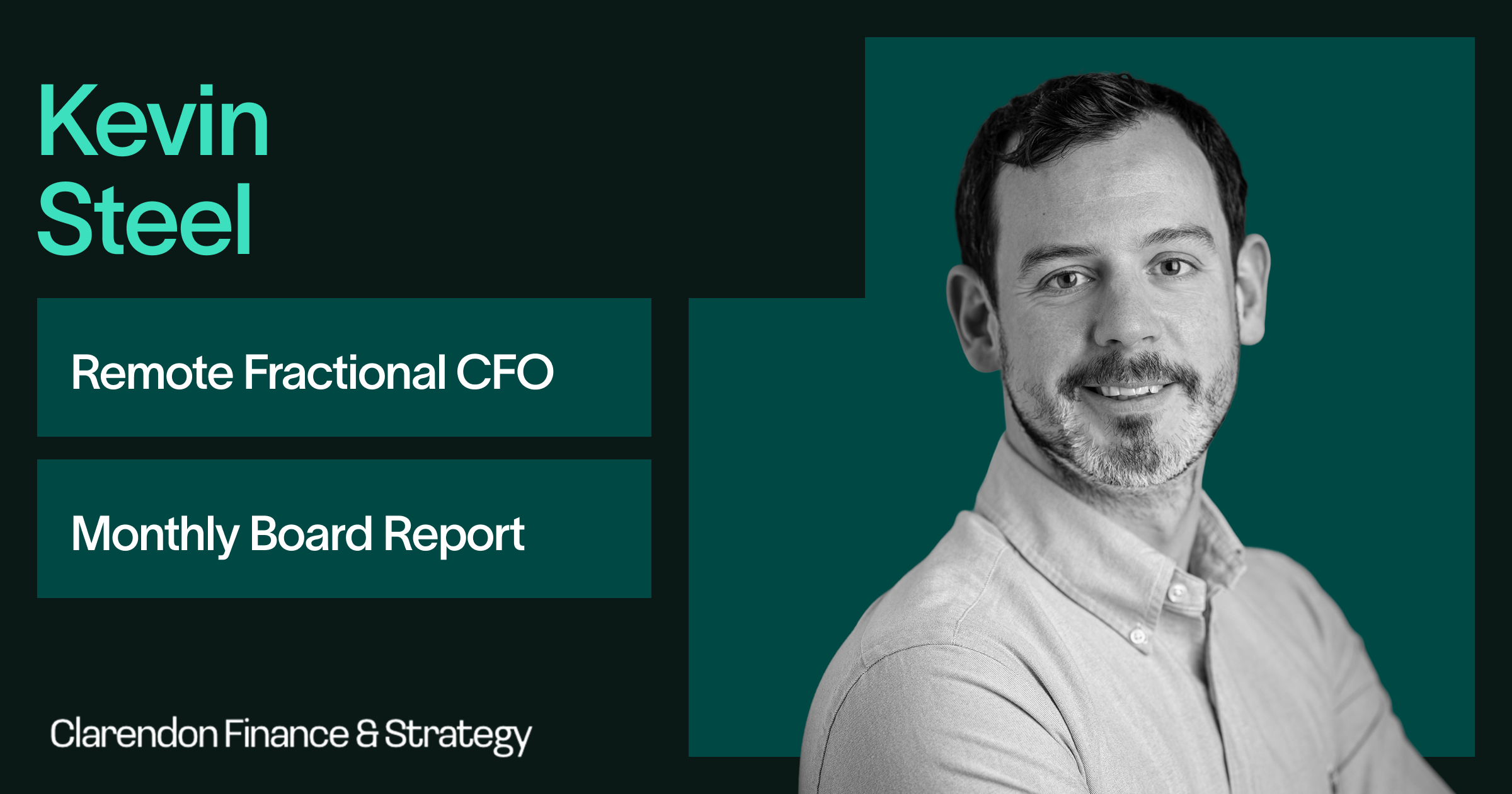
Kevin Steel, Claredon Finance & Strategy
Kevin Steel brings over 15 years of financial leadership experience to his role as a fractional CFO, specializing in B2B service companies in the £1M-£20M revenue range. His unique background includes both building and selling his own accounting firm, giving him insights from both sides of the advisor-client relationship.
Kevin's approach centers on "linking finance to strategy." He makes sure financial data directly informs business decisions rather than existing as historical compliance records. He's developed a systematic three-stage framework (Discovery, Implementation, Business as Usual) that has achieved a 98% client conversion rate over three and a half years.
As a Fathom power user, Kevin has refined his board reporting template across dozens of clients, continuously improving how financial information can be visualized for non-financial stakeholders. His monthly board reports combine traditional financial metrics with department-specific KPIs, making Fathom "the source of truth" for strategic decision-making.
"The visualization and the ability to display financial information to perhaps non-finance people. That's what brought me to Fathom. If you send non-financial people loads and loads of Excel breakdowns, they really just look at the top four or five metrics. But if you have everything displayed in Fathom visualized, it's a lot easier to understand."
Want to learn more from Kevin? Watch his Ask an Expert session here.